

Yi Zhang, Ph.D.
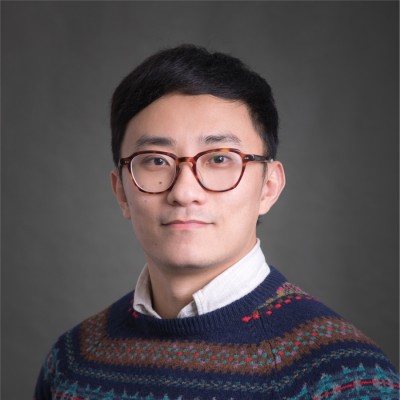
Associate Professor
Campus Address: EH 205
Email: yzhang [at] desu.edu
302.857.7063
EDUCATION
- Ph.D., Second Language Acquisition & Instructional Technology, University of South Florida, 2017
- M.A., Teaching English as a Second Language, Pennsylvania State University, 2012
- B.A., English Education, Yangzhou University (Jiangsu, China), 2010
Research Interests
Dr. Zhang is an Associate Professor in the Department of Languages and Literatures at DSU. He currently serves as Director of the ESL programs and Executive Director of DSU’s Chinese Language and Culture Research Center. Dr. Zhang teaches both undergraduate and graduate courses in applied linguistics and TESOL. His main research interests include sociolinguistics, discourse analysis, multilingualism and translanguaging, language and globalization, and computer-mediated communication. His research is published in international SSCI-indexed journals such as Social Semiotics, International Journal of Multilingualism, Discourse, Context & Media, Linguistics and Education, International Multilingual Research Journal, Pragmatics and Society, among others, and in book chapters and volumes on translanguaging and Global Englishes. He currently serves on the editorial board of Discourse, Context & Media.
- Applied Linguistics
- Sociolinguistics
- Discourse Analysis
- English Education
Consultation Expertise
My expertise of research and teaching in applied linguistics and English education provides professional and academic knowledge and skills in sectors of social media research, public relations, language teaching/learning mentorship and understanding of culture and intercultural communication. In addition, my experience in academic writing, journal peer-review and collaborative research projects facilitate training in academia as well as graduate readiness.
PUBLICATIONS
- Zhang, Y. (2026). Celebration of language play and humour: Translanguaging and carnivalesque literacy practices in Chinese digital space. In Tagg, C., Giaxoglou, K. & Lexander, K. V. (Eds.), The Routledge Handbook of Language and Social Media around the World (pp. 149-162). New York: Routledge. DOI: 10.4324/9781003360339-13.
- Zhang, Y. & Dovchin, S. (2026). Creating spaces of creativity and criticality: Social media in East Asia. In Tagg, C., Giaxoglou, K. & Lexander, K. V. (Eds.), The Routledge Handbook of Language and Social Media around the World (pp. 145-148). New York: Routledge. DOI: 10.4324/9781003360339-12.
- Zhang. Y., Zhang. L. (2025). “Do not approach men. You will be miserable” - Feminist humor in “misandry” memes on Chinese microblogging. Internet Pragmatics, 8(1), 58-85. https://doi.org/10.1075/ip.00120.zha
- Zhang, Y., & Zhang, L. (2025). Language of online consumer reviews. In Nesi, H., & Milin, P. (in press), International Encyclopedia of Language and Linguistics (3rd Edition). Elsevier. https://doi.org/10.1016/B978-0-323-95504-1.00424-5
- Zhang, Y., & Wei, R. (2025). Instructors’ strategic use of L1 through a translanguaging perspective in a Chinese EMI university – Opportunities and challenges. In R. Yuan & X. Qiu (eds), English Medium Instruction Pedagogy in Disciplinary Classrooms (pp. 89-110). New York: Routledge. ISBN: 9781003432500
- Bogachenko, T., Burke, R., Zhang, Y., & Gong, Q. (2025). The use of Google Translate for language learning in emergency forced displacement contexts. Australian Review of Applied Linguistics, 47(3), 309-339. https://doi.org/10.1075/aral.24098.bog
- Zhang, Y., Zhang, L., Wei, R., & Liu, Y. (2024), “(scream)(wriggle)(dismally crawl)” - Parentheses as semiotic resources for translanguaging and trans-semiotic practices on Chinese micro-blogging, Social Semiotics, 35(2), 294-311. https://doi.org/10.1080/10350330.2024.2306548
- Wu, Y., Ren, W., & Zhang, Y. (2024). Attacks and remedies of online public opinion reversal events. Pragmatics and Society, 15(3), 448-470. https://doi.org/10.1075/ps.21095.wu
- Zhang, Y., & Ren, W. (2024). From hǎo to hǒu – stylising online communication with Chinese dialects. International Journal of Multilingualism, 21(1), 149-168. https://doi.org/10.1080/14790718.2022.2061981
- Zhang. Y., Zhang. L., Wei. R, & Liu. Y. (forthcoming), “(scream)(wriggle)(dismally crawl)” - Parentheses as semiotic resources for translanguaging and trans-semiotic practices on Chinese micro-blogging, Social Semiotics, https://doi.org/10.1080/10350330.2024.2306548
- Wu, Y., Ren, W. & Zhang, Y. (2023). Attacks and remedies of online public opinion reversal events. Pragmatics and Society. https://doi.org/10.1075/ps.21095.wu.
- Zhang, Y., & Ren, W. (2022). From hǎo to hǒu – stylising online communication with Chinese dialects. International Journal of Multilingualism. 1-20. Available at: https://www.tandfonline.com/doi/full/10.1080/14790718.2022.2061981
- Zhang, L., Zhang, Y., & Cao, R. (2022). “Can we stop cleaning the house and make some food, Mum?”: A critical investigation of gender representation in China’s English textbooks. Linguistics & Education, 69, 101058. Available at: https://www.sciencedirect.com/science/article/abs/pii/S0898589822000468
- Zhang, L., Zhang, Y. (2022). “NoL, please be away from my life.” - Pejorative neologisms for stigmatizing males in Chinese micro-blogging. First Monday, 27(9). Available at: https://firstmonday.org/ojs/index.php/fm/article/view/12402
- Zhang, Y., & Ren, W. (2020). “This is so skrrrrr” – Creative translanguaging by Chinese microblogging users. International Journal of Multilingualism, 19(3), 289-304. Available at: https://www.tandfonline.com/doi/full/10.1080/14790718.2020.1753746
- Zhang, Y. (2019). English as a linguistic resource. English Today, 37(1), 34-41. Available at: https://doi.org/10.1017/S0266078419000324
- Zhang, Y. (2017). The semiotic multifunctionality of Arabic numerals in Chinese online discourse. Language@Internet, 14, article 2. Available at: http://www.languageatinternet.org/articles/2017/zhang
- Zhang, Y., & Vásquez, C. (2014). Hotels’ responses to online reviews: Managing consumer dissatisfaction. Discourse, Context & Media, 6, 54-64. Available at: https://www.sciencedirect.com/science/article/pii/S2211695814000233
COURSE INSTRUCTION
- ENGL 410/510: The Structures of Modern English
- ENGL 590: Practicum
- ENGL 592: Applied Research